
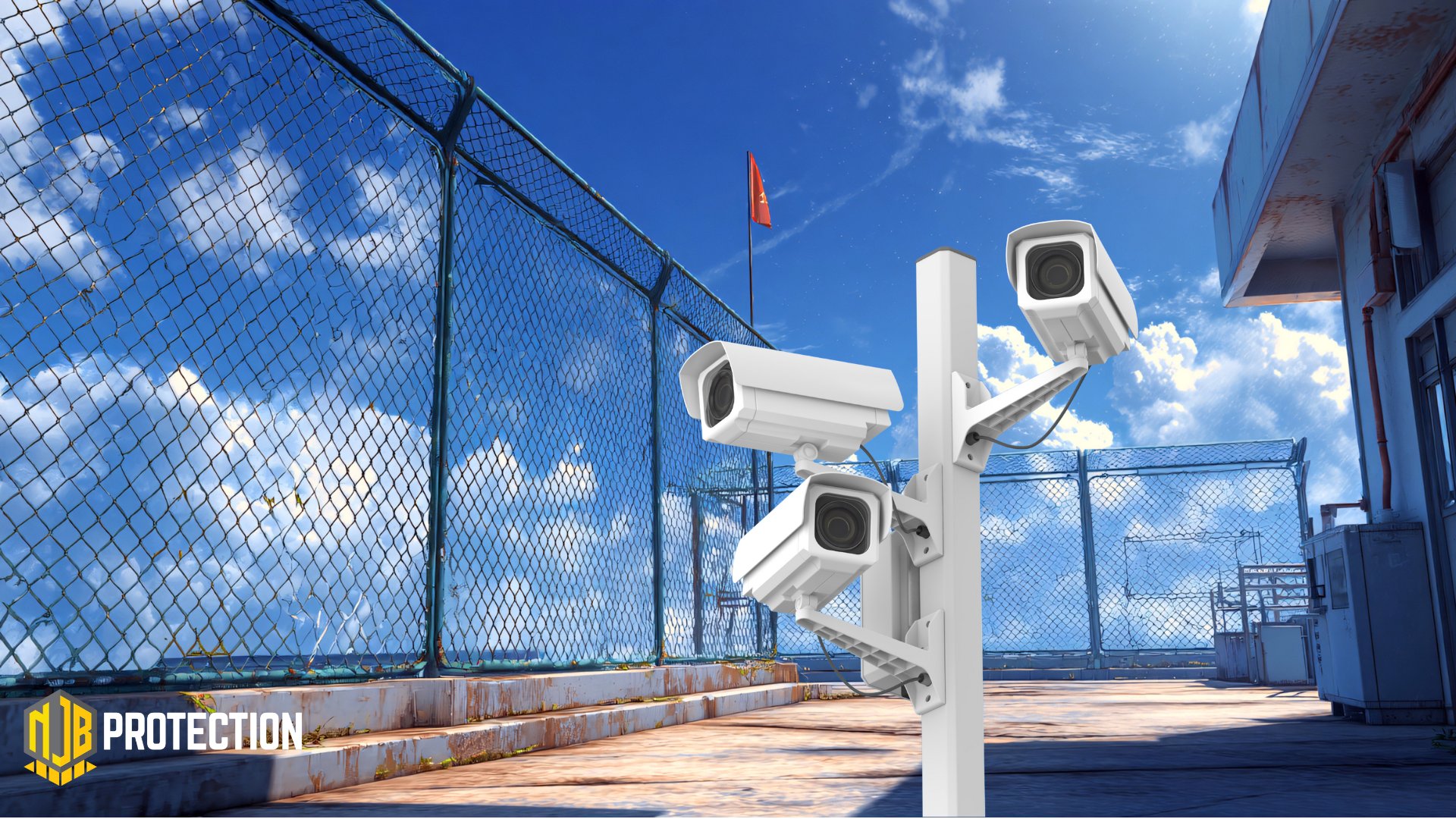
(And Why Every Modern Security Program Is Rethinking Its Eyes)
The Problem
For decades, perimeter security has been stuck in the same loop: cameras, fencing, and guards watching screens — waiting for something to happen.
The problem? By the time something does happen, it’s already too late.
Even with newer tech, most systems still struggle with context. They can’t always tell whether it’s a person, a car, or a stray animal. The result:
- Constant false alarms
- Missed incidents
- Fatigue among monitoring teams
- Wasted response time
Seeing what happens isn’t the hard part anymore — understanding it is.
The Shift Toward Intelligence
The new era of perimeter protection is here, and it’s powered by data and machine learning. AI-driven analytics, thermal imaging, and LiDAR are transforming the way sites detect and respond to real-world threats — instantly.
Today’s systems can:
- Identify with precision: AI differentiates people, vehicles, and objects in real time.
- See through the elements: Thermal and radar sensors cut through fog, darkness, and harsh weather.
- Think at the edge: On-device intelligence reduces delays and bandwidth load.
- Connect everything: Unified command centers merge live feeds, alerts, and analytics into one intelligent view.
The result isn’t more footage — it’s fewer surprises.
What It Looks Like in Practice
Picture a large energy substation. Instead of relying on motion sensors alone, it runs on a network of smart cameras and radar units.
When movement is detected:
- The system instantly classifies it — animal, vehicle, or human.
- If it’s a person near a restricted area, live video and coordinates are pushed to operators within seconds.
- Security teams can verify and respond before a breach even happens.
No guessing. No chasing ghosts. Just data-driven certainty that turns reaction into prevention.
Where It’s Heading
As AI continues to evolve, the perimeter of the future is becoming more predictive than reactive. Expect to see:
- Behavioral analytics that spot unusual movement patterns before incidents occur.
- Autonomous drones providing live confirmation and tracking.
- Smart integration with lighting, access control, and intercoms for automated deterrence.
We’re moving from fixed boundaries to adaptive ecosystems — intelligent networks that learn, evolve, and respond as fast as the risks themselves.
Final Thoughts
Perimeter security isn’t just about barriers anymore. It’s about vision — how intelligently and quickly you can interpret what’s happening around you.
Technology is giving us sharper eyes and faster instincts. But the real transformation comes from connecting those tools into one cohesive, intelligent defense system.
If you’re in charge of security strategy — ask yourself:
Are your systems still watching, or are they starting to think?