
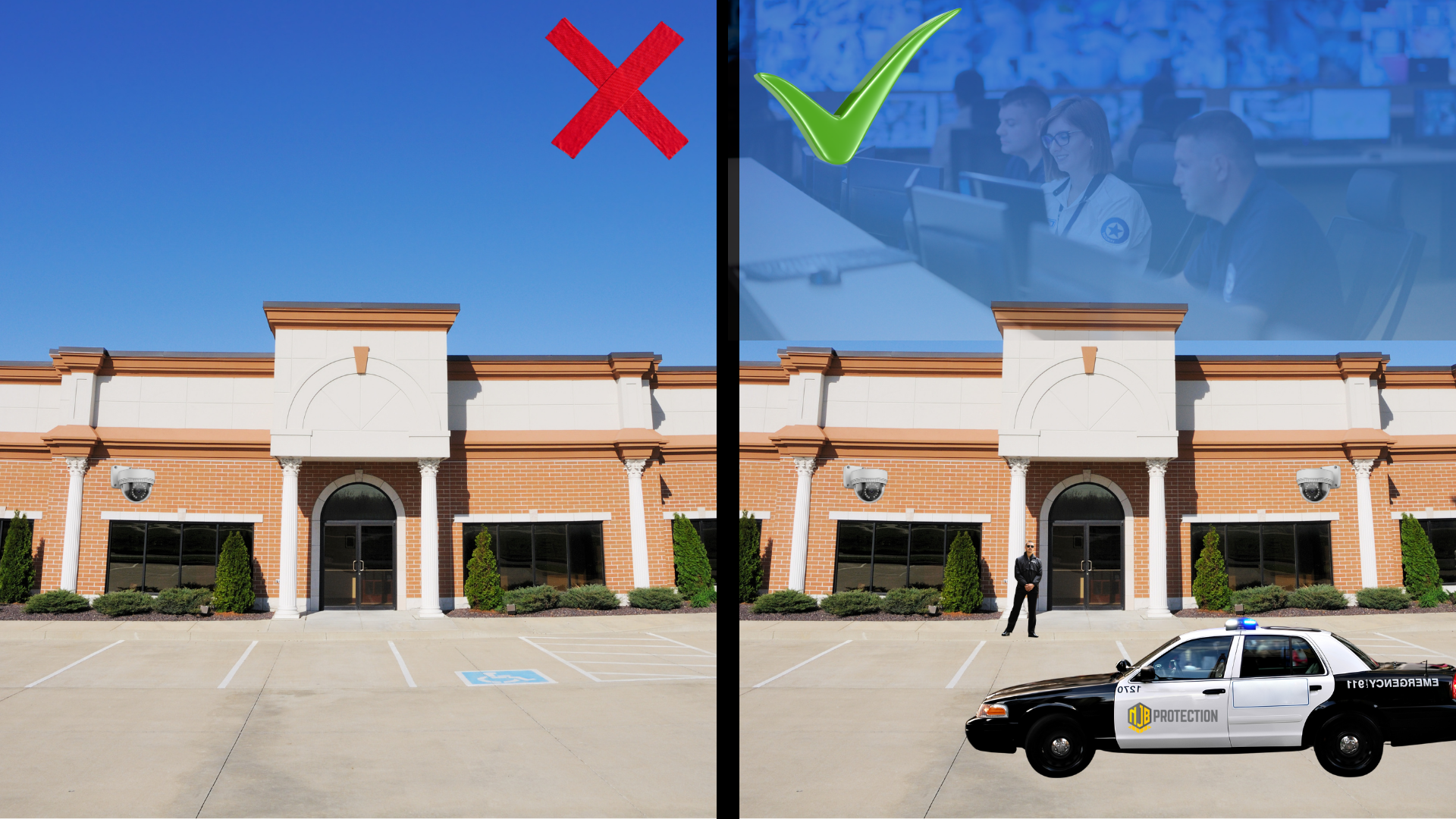
(Because Single Points of Failure Are an Open Invitation.)
By Ryan Mueller
January 2026
For years, many security programs relied on a single layer of protection.
A guard at the gate.
A perimeter fence.
A few cameras covering the building.
And the assumption was simple: if something went wrong, someone would catch it.
But modern threats don’t respect single-layer defenses.
And relying on just one line of protection today isn’t security.
It’s exposure.
The Problem with Single-Layer Security
Single-layer systems fail for one simple reason:
If that one layer fails, everything behind it becomes vulnerable.
Consider common examples:
- A camera goes offline
- A guard misses suspicious activity
- A motion sensor is triggered by wind
- An access card gets shared or stolen
When security relies on one system, one person, or one device, the entire program becomes fragile.
Modern risk environments demand redundancy.
Not complexity — resilience.
What Layered Security Actually Means
Layered security doesn’t mean throwing technology everywhere.
It means building multiple lines of defense that support each other.
Each layer strengthens the one before it.
A well-designed layered security program typically includes:
- Perimeter detection — cameras, sensors, radar, or thermal imaging
- Access control — managing who can enter restricted areas
- Intelligent monitoring — command centers reviewing alerts in real time
- Rapid response capabilities — trained teams ready to act when something is verified
- Data analytics — identifying patterns and improving future security decisions
No single element carries the full burden.
The system works together.
Why Layered Security Reduces Risk
When multiple layers exist, failure in one area doesn’t automatically create a breach.
Instead, the next layer steps in.
For example:
A perimeter camera detects movement.
AI verifies whether the object is human.
Access logs are checked automatically.
An operator receives a verified alert.
A response team is dispatched if needed.
Instead of relying on one system to catch everything, the environment continuously validates threats.
This dramatically reduces:
- missed incidents
- false alarms
- delayed responses
- unnecessary dispatches
And that’s the real value of layered protection.
What It Looks Like in Practice
Imagine a logistics facility operating overnight.
Old model:
Fence → camera → security patrol every hour.
If someone slips through unnoticed, there’s little stopping them.
Layered model:
Perimeter radar detects movement → AI camera verifies human presence → system checks authorized access → command center confirms intrusion → response team deploys.
Each layer confirms the one before it.
By the time someone reaches the facility, multiple systems have already seen them.
Why Modern Security Leaders Are Adopting This Model
Organizations today face faster, more unpredictable threats.
Retail environments.
Logistics networks.
Critical infrastructure.
Single defenses simply cannot keep up.
Layered security programs provide:
- Redundancy — protection continues even if one system fails
- Faster detection — threats are identified earlier
- Smarter responses — alerts are validated before escalation
- Operational resilience — security continues even under disruption
In other words, layered security turns isolated tools into a coordinated defense strategy.
Frequently Asked Question
What is layered security?
Layered security is a strategy that uses multiple complementary security systems — such as cameras, access control, analytics, and response teams — to detect, verify, and respond to threats at different stages.
Instead of relying on a single defense, layered security ensures that multiple systems work together to reduce risk.
Final Thoughts
Security programs used to focus on visibility.
Today they need resilience.
Because modern threats move quickly, and a single missed signal can escalate into a major incident.
Layered security ensures that no single failure becomes a full breakdown.
In today’s environment, it’s not just best practice.
It’s the new baseline.