
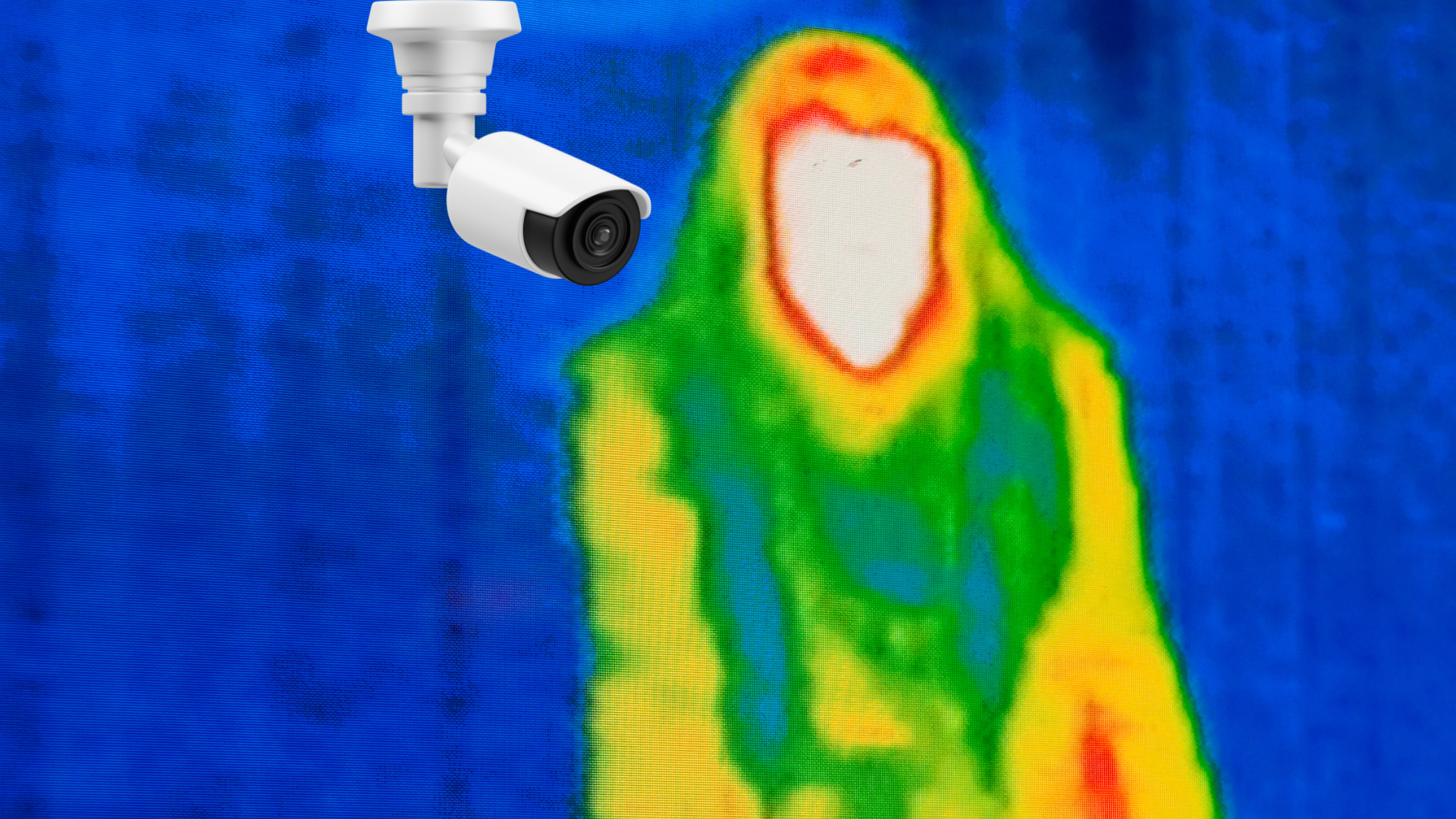
(Because Seeing Heat Beats Seeing Late.)
If there’s one thing security professionals agree on, it’s this:
Time is everything.
The faster you detect, the faster you act. The faster you act, the smaller the impact.
For years, video surveillance relied on traditional cameras—great for visibility, useless in darkness, fog, smoke, or glare. Then came thermal imaging: cameras that “see” heat instead of light.
Now, with AI layered on top, they don’t just detect movement—they understand what they’re seeing and why it matters.
This combination is quietly redefining what “early detection” actually means.
The Problem with Conventional Surveillance
Traditional video has limits. It struggles in low light, bad weather, and complex outdoor environments where visibility constantly changes.
You can flood an area with lights, add motion sensors, and still miss the one event that matters most.
Meanwhile, operators drown in false alarms triggered by shadows, wind, or harmless animals.
The result? Fatigue, slow response, and a dangerous pattern of “ignore until it’s real.”
Why Thermal Imaging Changes the Game
Thermal cameras don’t care about light. They read heat signatures, allowing you to “see” through smoke, darkness, or foliage.
That means:
- 24/7 visibility, no matter the conditions.
- Reduced false alarms, since heat patterns are more distinct than light-based motion.
- Earlier detection, because thermal contrast reveals threats before they’re visible to the naked eye.
And when paired with AI analytics? The difference is night and day—literally.
AI + Thermal: Smarter, Not Just Sharper
AI takes thermal imaging from reactive to predictive.
Instead of just identifying heat, it interprets behavior.
Here’s how it works:
- AI distinguishes between humans, vehicles, and animals based on movement and thermal patterns.
- It recognizes anomalies—like someone lingering near a fence line or moving against flow in a restricted zone.
- It filters out environmental “noise,” so your team only sees real alerts.
In other words, the camera stops being a passive watcher and becomes an intelligent sensor—one that knows when to speak up.
The Real-World Impact
Thermal + AI isn’t just futuristic—it’s already in play across multiple sectors:
- Critical Infrastructure: Detecting intruders long before they reach fences or perimeters.
- Logistics & Warehousing: Spotting heat buildup in machinery before it becomes a fire risk.
- Utilities & Energy: Monitoring remote substations for unauthorized access or overheating.
- Airports & Ports: Tracking movement across vast open areas where visibility is often poor.
These applications all share one thing: early awareness.
When you see earlier, you act earlier—and that’s often the difference between a close call and a full-blown incident.
The Cost Conversation
Thermal imaging used to be expensive—reserved for military or high-security sites. But not anymore.
Prices have dropped significantly, and scalable AI platforms now make it easier to integrate these systems without ripping out what you already have.
Today, even mid-size organizations are deploying hybrid setups: combining thermal cameras with existing visual systems and AI analytics.
It’s not about replacing—it’s about enhancing.
What’s Next: Predictive Protection
As AI gets smarter, the future points toward predictive detection—where systems identify risks before they happen.
Imagine:
- AI detecting unusual body heat patterns that suggest stress or intent.
- Cameras predicting motion paths of potential intruders.
- Systems automatically deploying deterrents or alerts based on predicted actions.
That’s where we’re headed—and it’s coming faster than most realize.
Final Thoughts: The Power of Seeing Differently
At its core, security is about awareness—seeing what others don’t, before they do.
Thermal imaging with AI delivers that awareness in ways traditional systems simply can’t.
Not by adding more noise or more screens—but by offering clarity, context, and time.
Because in security, the most valuable thing you can see—
is the thing no one else can.
Do you think thermal and AI will become standard in every major security operation—or is it still too early for mass adoption?