
Helping Healthcare: Threats, Solutions, and Real-World Lessons
By Ryan Mueller
For years, many healthcare organizations approached security primarily as a response function.
An incident happened. Security responded. Reports were filed. Operations moved forward.
But today’s healthcare environments are facing a very different reality.
Workplace violence is increasing, staffing shortages continue to intensify, and frontline healthcare workers are experiencing significantly higher levels of aggression, threats, and burnout.
The numbers are becoming impossible to ignore, and many healthcare organizations are realizing that traditional approaches to safety are no longer enough.
And the numbers are becoming impossible to ignore.
Healthcare workers now face workplace violence at nearly four times the rate of other industries, contributing to an estimated $18 billion annual impact across the healthcare system.
But the financial impact only tells part of the story. The larger issue is what this environment is doing to workforce stability.
Because when frontline workers do not feel safe, retention suffers.
Experienced staff leave, burnout accelerates, and new healthcare professionals begin questioning whether the environment is sustainable long term. At that point, the issue becomes much larger than security alone.
It becomes a workforce stability issue that directly impacts healthcare operations.
At ISC West, one healthcare-focused session stood out for addressing this challenge directly. The discussion centered around how healthcare organizations are rethinking safety strategies through integrated security technologies, operational collaboration, and more proactive approaches to protecting frontline workers.
And one theme became very clear throughout the conversation.
Healthcare security is no longer just about responding to incidents.
It is becoming a critical operational strategy tied directly to staffing, retention, patient trust, and long-term organizational resilience.
Healthcare Security Is Becoming a Workforce Issue
One of the strongest takeaways from the session was the growing connection between safety and staffing.
For years, staffing shortages have dominated healthcare conversations. But increasingly, organizations are realizing that workplace violence and safety concerns are actively contributing to the staffing crisis itself.
The environment itself is becoming part of the retention problem.
When nurses, clinicians, and frontline staff repeatedly experience aggressive behavior, verbal threats, or unsafe working conditions, the long-term impact extends far beyond individual incidents.
It affects morale, burnout, and long-term retention across healthcare organizations. Over time, it also impacts culture, operational efficiency, and the overall perception of safety within healthcare environments.
And it influences whether new workers are willing to enter the industry at all.
The session highlighted how many healthcare workers believe stronger security measures could help prevent incidents, yet many organizations still struggle to implement meaningful improvements.
That gap is creating operational pressure across healthcare systems already operating with limited resources.
As a result, healthcare organizations are beginning to view security investments differently.
Not simply as protective measures, but as workforce stabilization strategies tied directly to retention, operational continuity, and employee well-being.
Security Is Becoming a Force Multiplier
A phrase that repeatedly surfaced during the discussion was “security as a force multiplier.”
And in many ways, that concept defines where healthcare security is heading.
Most healthcare organizations cannot simply solve safety concerns by continuously adding more personnel.
Resource limitations, labor shortages, and the sheer size of many healthcare campuses make that approach increasingly difficult to sustain long term.
Instead, organizations are looking for ways to extend the effectiveness of existing teams through integrated security systems, better visibility, and smarter operational workflows.
That includes technologies such as:
- AI-enabled surveillance systems
- Integrated visitor management platforms
- Wearable duress buttons
- Emergency lockdown systems
- Unified credentialing
- Real-time alerting and analytics
- Advanced access control systems
When properly integrated, these technologies allow smaller security teams to respond faster, improve situational awareness, and coordinate more effectively across complex healthcare environments.
But the session also reinforced an important point: technology alone is not the solution.
Healthcare environments require layered security strategies that combine technology, people, process, and operational coordination.
Healthcare Requires Layered Security
One of the most practical themes discussed throughout the session was the importance of layered security.
Healthcare environments are uniquely complex.
Hospitals must remain accessible and welcoming while simultaneously protecting staff, patients, visitors, and sensitive areas. That creates challenges many other industries simply do not face.
This becomes even more difficult when emotions, stress, and unpredictable situations are already elevated.
Unlike high-security environments where restrictive barriers may be acceptable, healthcare organizations must balance safety with patient experience.
As a result, successful healthcare security strategies increasingly rely on layered approaches that combine:
- Technology
- Personnel
- Operational processes
- Facility design
- Training and de-escalation
- Cross-functional coordination
The session highlighted how technologies such as panic buttons, integrated cameras, AI-powered alerts, and visitor management systems are most effective when paired with clearly defined response workflows and trained personnel.
Because in high-stress environments, technology without operational clarity can quickly create confusion rather than improve safety.
The organizations seeing the most success are the ones aligning security operations, frontline communication, and response workflows together.
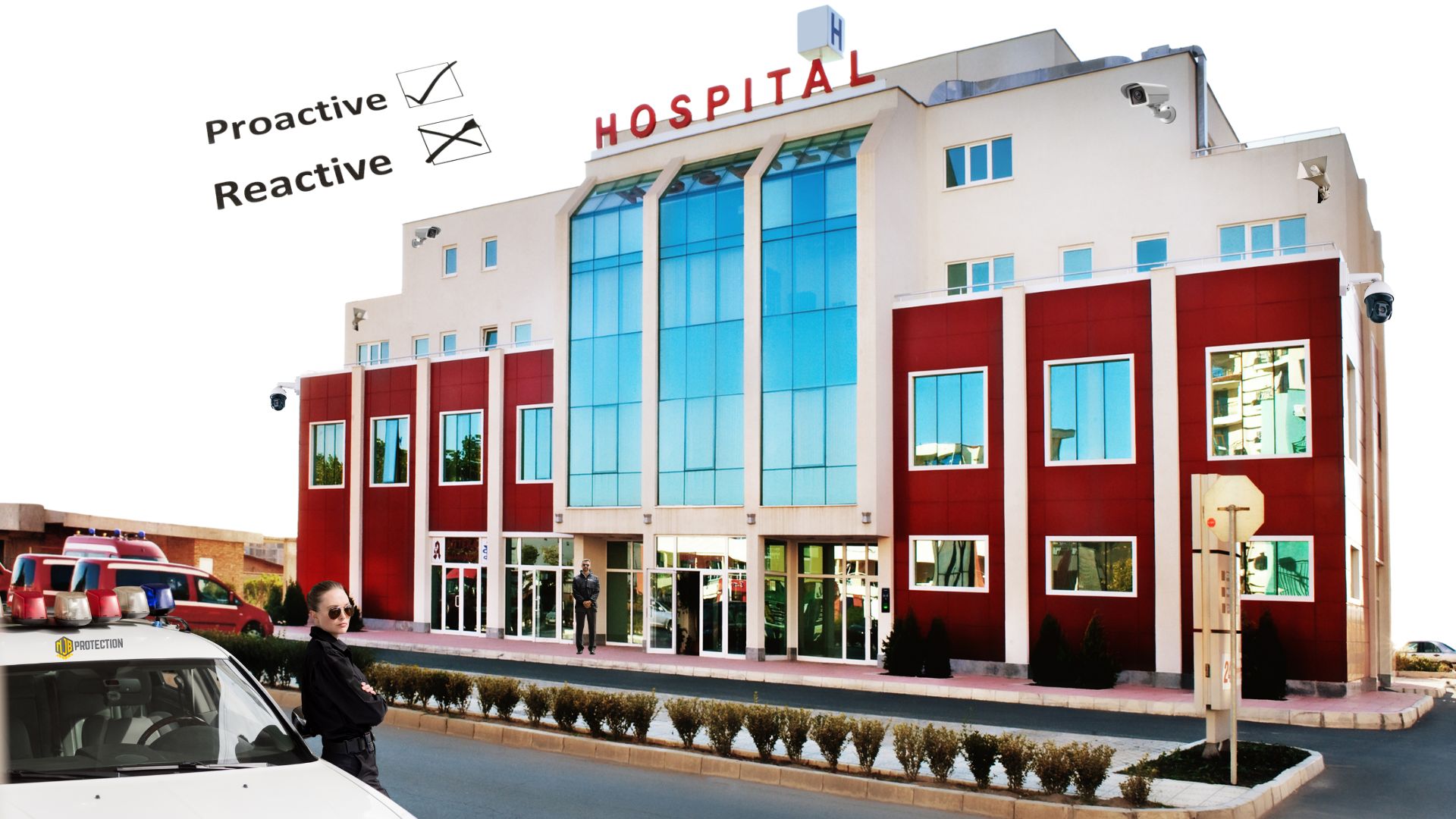
Healthcare Security Is Shifting From Reactive to Proactive
Another major theme throughout the session was the shift from reactive security to proactive risk management.
That shift is fundamentally changing how healthcare organizations think about safety. The focus is increasingly moving toward prevention rather than response.
Historically, many healthcare security programs focused primarily on responding after incidents occurred.
But modern healthcare organizations are increasingly leveraging data, analytics, and AI-driven technologies to identify risks before situations escalate.
That includes:
- Monitoring behavioral patterns
- Identifying repeat incidents or high-risk areas
- Tracking persons of interest
- Improving real-time situational awareness
- Enhancing emergency coordination
- Reducing response times across large campuses
AI-driven systems are increasingly being used to help healthcare organizations process information faster and improve decision-making during critical events.
The goal is not simply to document incidents after they happen.
The goal is to identify patterns early, reduce escalation risks, and prevent incidents whenever possible.
And that shift represents a major evolution in how healthcare organizations approach safety.
Frontline Worker Feedback Matters More Than Ever
One of the strongest operational takeaways from the session was the importance of involving frontline workers directly in security conversations.
Because the individuals closest to the risks often have the clearest understanding of what is actually needed.
The session repeatedly emphasized that leadership assumptions do not always align with frontline realities.
What leadership believes improves safety is not always what frontline teams experience day to day.
Sometimes the most impactful improvements are not massive overhauls.
In many cases, they involve operational improvements such as:
- Faster response visibility
- Improved communication workflows
- More accessible panic systems
- Better coordination between departments
- Increased security presence in high-risk areas
Healthcare organizations are increasingly recognizing that effective security strategies cannot be designed in isolation.
They require collaboration between:
- Security teams
- Operations
- HR
- Patient experience
- Facilities
- Clinical leadership
- IT and cybersecurity teams
This cross-functional approach is helping organizations build more practical, scalable, and sustainable safety programs.
And increasingly, healthcare organizations are realizing that security cannot operate in isolation from the broader patient and employee experience.
Aging Infrastructure Remains a Major Challenge
One challenge that surfaced repeatedly throughout the session was infrastructure.
Many healthcare facilities were not designed for today’s integrated security technologies.
Older hospitals often operate with legacy systems, fragmented infrastructure, and physical layouts that create integration challenges. That makes modernization significantly more difficult than simply deploying new technology.
In many cases, healthcare organizations are trying to modernize while still maintaining uninterrupted operations.
As organizations attempt to deploy modern AI, surveillance, and communication platforms, they must simultaneously work within aging environments that were never built for those capabilities.
That creates operational challenges involving:
- Scalability
- Network infrastructure
- System compatibility
- Budget limitations
- Phased deployment planning
The session reinforced that successful modernization requires strategic planning rather than isolated technology deployments.
Healthcare environments are simply too complex for one-size-fits-all solutions.
Healthcare organizations increasingly need flexible, phased approaches that align with operational realities.
AI Is Expanding the Role of Healthcare Security
Artificial intelligence was another major topic throughout the discussion.
And unlike many conversations surrounding AI, the focus here was highly practical and operationally focused. The conversation centered less around hype and more around real-world operational value.
Healthcare organizations are beginning to deploy AI-driven technologies that support:
- Real-time alerting
- Threat identification
- Visitor monitoring
- Facial recognition workflows
- Operational coordination
- Incident response acceleration
- Perimeter awareness
- Behavioral analytics
The session highlighted how AI can help reduce operational strain by improving visibility and allowing teams to focus attention where it is needed most.
But there was also caution throughout the conversation.
AI systems that are poorly integrated or improperly implemented can create unnecessary noise, alert fatigue, and operational confusion.
The value of AI ultimately depends on how effectively it supports real operational decision-making.
Which means successful adoption depends heavily on:
- Governance
- Integration planning
- Training
- Operational alignment
- Lifecycle management
The organizations that approach AI strategically will likely see significant long-term advantages.
Healthcare Security Must Become a Strategic Priority
Perhaps the clearest takeaway from the session was this:
Healthcare security can no longer be treated as a secondary operational function.
It directly impacts:
- Workforce stability
- Staff retention
- Patient trust
- Operational continuity
- Emergency preparedness
- Organizational resilience
The healthcare organizations making the most progress are the ones elevating security discussions beyond compliance and viewing safety as a long-term strategic investment.
Because in today’s healthcare environment, safety is no longer separate from operations.
It is becoming foundational to workforce stability, patient trust, and long-term organizational resilience.
Final Thoughts
The healthcare industry is operating under enormous pressure.
Healthcare organizations are being forced to balance patient care, workforce stability, operational efficiency, and safety simultaneously.
Staffing shortages, workplace violence, aging infrastructure, and rising operational demands are forcing organizations to rethink how they approach safety.
And increasingly, healthcare leaders are recognizing that traditional reactive security models are no longer enough.
The future of healthcare security will depend on integrated strategies that combine:
- Technology
- People
- Operational processes
- AI-driven insights
- Cross-functional collaboration
- Frontline worker engagement
Not simply to respond more effectively, but to create environments where healthcare workers feel safer, supported, and more capable of delivering care.
Because ultimately, stronger healthcare security is not just about reducing incidents.
It is about creating environments where people can continue doing some of the most important work in society safely and sustainably.
Because ultimately, protecting frontline healthcare workers is not just about security.
It is about protecting the long-term stability of healthcare itself.